Trending

A British summer wedding can hand you four seasons between the ceremony and the first dance. You leave the house in bright sunshine, shelter in a church doorway while the sky opens, and end up in a marquee at eleven at night wishing you had brought a jacket. The forecast helps, but only up to a point.
What you wear can be the difference between a long, happy day and eight hours of tugging at a hem, nursing sore feet and shivering through the speeches. Fortunately, getting it right is less about buying something new and more about choosing pieces that layer, move and survive a lawn.
A summer wedding here is a picnic, a church service and a disco in the same afternoon. Dress for all three.
Start by working out how long you will actually be dressed. A 2pm ceremony with carriages at midnight is a ten-hour commitment, and most of it happens outdoors or in a marquee. Ask the couple, or check the venue online, whether there is a gravel courtyard, a field to cross, a long walk from the car park, or a reception room that gets uncomfortably warm once the dancing starts.
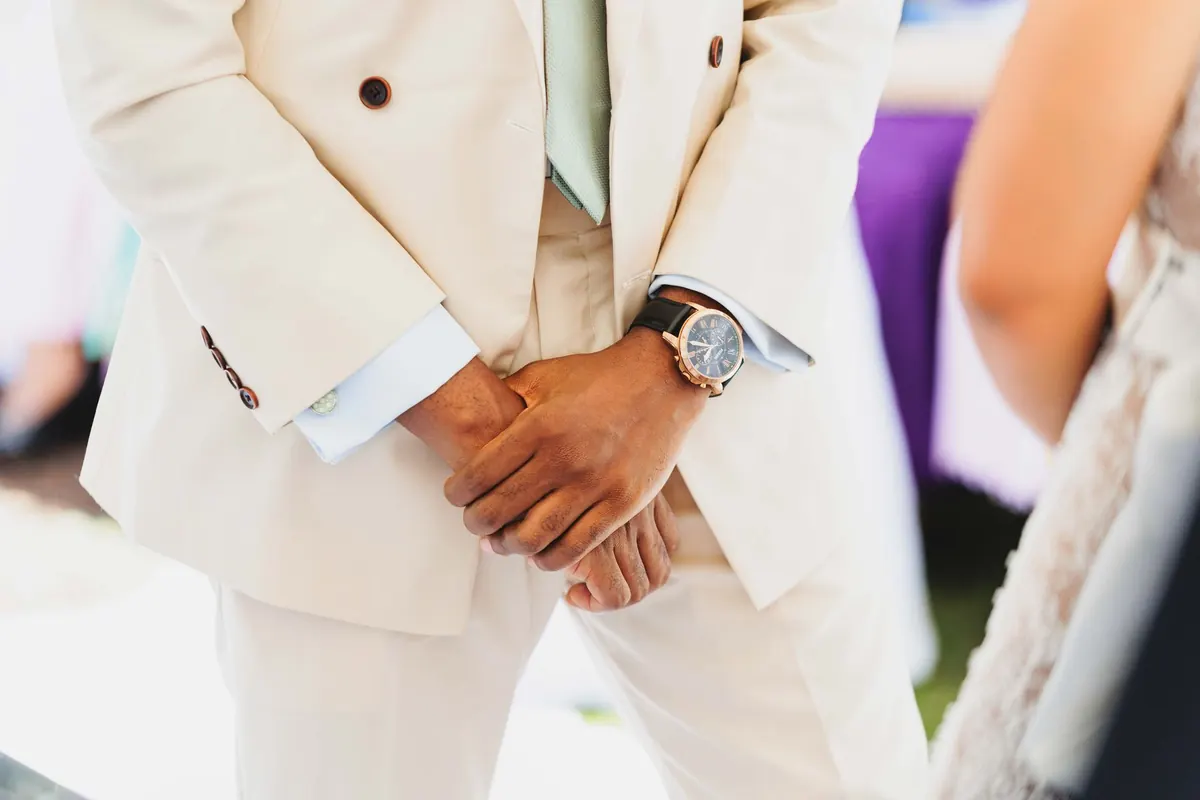
Then build your outfit in layers rather than in one heavy piece. A fine-gauge wool blazer or a light tailored jacket over a cotton dress does far more work than a thicker coat, because you can take it off without losing the shape of the outfit. If you are wearing a suit, a lightweight wool or cotton-blend two-piece in a mid-tone will keep you cooler than anything dark and close-fitting, and it still looks right when the temperature drops after sunset.
British invitations tend to be under-explained. Here is what the common ones usually mean.
Men: a suit and tie, or a suit with an open-collar shirt if the wedding feels relaxed. Women: a midi or maxi dress, a tailored jumpsuit, or a smart trouser suit. A hat is optional; a fascinator or a simple headband is plenty for most weddings, and if the ceremony is in a small church, consider whether a wide brim will block the view of the person behind you.
Men: dinner jacket, black trousers, bow tie. Women: a long dress or an elegant cocktail dress, with a wrap or stole for the evening. Resist the urge to wear velvet in July; it photographs beautifully and feels dreadful by nine o'clock.
This is where people panic and either overdress or turn up in jeans. Aim for one notch smarter than you think. Chinos and a blazer, a linen shirt, a colourful midi dress, a jumpsuit with flat sandals. For a festival-style wedding, a cotton dress with boots or a block-heel sandal works better than anything fragile.
If you are genuinely unsure, ask another guest rather than the bride. And when in doubt, err smarter: it is easier to remove a jacket or a hat than to magic up a tie.
Do not wear white, ivory or anything that could be mistaken for a wedding dress in a photograph. Pale champagne and cream are risky at a summer wedding where everyone is in light colours. If you know the bridesmaids' palette, avoid matching it head to toe; you will spend the day being mistaken for part of the wedding party and standing in the wrong photos.
Black works, but it can look heavy in bright midday light. If you love it, break it up with a lighter accessory, a print or a mid-tone shoe. Otherwise, navy, sage, terracotta, raspberry, cornflower blue and soft green all flatter in summer light and photograph well. Bold florals are welcome at most summer weddings, but keep them to one garment rather than a matching dress-and-bag set.
Stilettos and freshly mown grass are enemies. Block heels, wedges, kitten heels, loafers and smart flat sandals are your friends, and a block heel with a slightly wider base will keep you upright on gravel too. If the ceremony and reception are in different places, keep a pair of flat shoes in the car and swap them for the walk back to the taxi.
Buy or break in your shoes at least a week before, and if you are wearing a floor-length dress, have it hemmed at the height of the heel you will actually wear. If you plan to change into flats in the evening, take the dress to the tailor in the flats instead. A hem that skims the floor in heels will trail on the ground in flats.
A small bag limits what you can carry, so choose carefully:
Stand in front of a full-length mirror and sit down, then stand up again. Raise your arms. Walk a few steps. If the dress rides up, the jacket pulls across the back or the waistband digs in when you sit, you will feel every one of those things for the next ten hours.
Then check three practicalities: can you manage the loo alone, will the outfit survive being rained on, and can you dance in the shoes? If the answers are yes, you are ready. Take a layer you can shed, leave the outfit you would worry about at home, and remember that the best-dressed guest is usually the one who looks comfortable, stays warm and is still on the dance floor at the end of the night.
Photo: NUDE Nahum / Pexels